U.S. inflation ticks higher to 2.8% in November as consumer spending stays firm, AP reports
A key inflation measure rose slightly in November to 2.8% year over year, while consumer spending increased. The AP says the data, released after a shutdown delay, suggests the Fed may be less likely to cut rates soon.
- PUBLISHED
- UPDATED
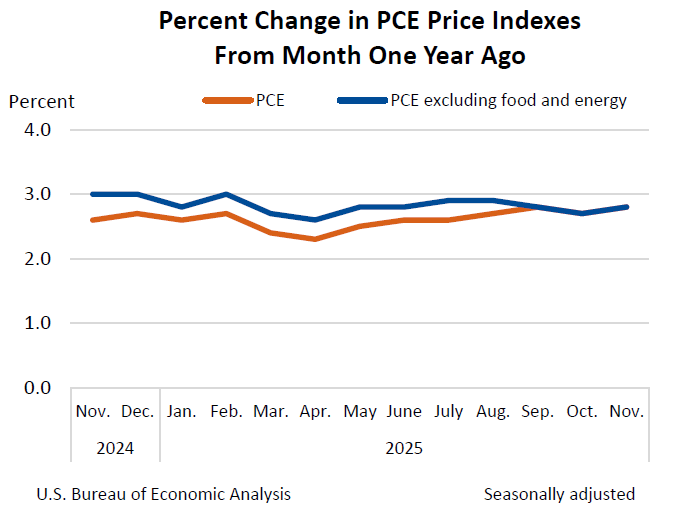
U.S. inflation picked up modestly in November as Americans continued to spend, offering a mixed snapshot for policymakers balancing price pressures against a cooling labor market. The Associated Press reported that consumer prices rose 2.8% from a year earlier, up from 2.7% in October, based on Commerce Department data. Core prices, which exclude food and energy, showed a similar uptick. ([apnews.com](https://apnews.com/article/ac538fd750b4622ee7fa439ef8021783?utm_source=openai))
At the same time, consumer spending rose 0.5% from October to November, a sign households are still buying even as many remain frustrated by prices that—while far below their 2022 peak—continue to feel elevated in daily life. Economists watching demand indicators see steady spending as a factor that can keep inflation from falling quickly back to the Federal Reserve’s 2% target. ([apnews.com](https://apnews.com/article/ac538fd750b4622ee7fa439ef8021783?utm_source=openai))
The month-to-month inflation pace was described as moderate—0.2% from October to November—suggesting inflation could still drift down over time. But any “higher for longer” consumer demand increases the chance that inflation progress stalls, especially in categories where services costs and housing-related expenses remain sticky. ([apnews.com](https://apnews.com/article/ac538fd750b4622ee7fa439ef8021783?utm_source=openai))
The report also landed in an unusual context: a six-week government shutdown delayed its release. That timing matters because markets and the Fed typically digest inflation readings in real time; delayed data can complicate messaging and make it harder to separate trend from noise. The AP said the overall picture is likely to reduce pressure on the Fed to cut rates in its next meeting, because above-target inflation paired with solid spending lowers the urgency for monetary easing. ([apnews.com](https://apnews.com/article/ac538fd750b4622ee7fa439ef8021783?utm_source=openai))
Job growth, however, has slowed, leaving many job seekers facing longer searches even with unemployment still relatively low. This combination—cooling hiring alongside steady spending—can produce a policy tension: the Fed wants to protect labor-market gains without reigniting inflation. The AP framed the latest numbers as consistent with an economy that remains resilient but not fully “out of the woods” on price stability. ([apnews.com](https://apnews.com/article/ac538fd750b4622ee7fa439ef8021783?utm_source=openai))
For businesses and households, the practical implication is that borrowing costs may stay elevated longer than many had hoped, with rate cuts less certain until inflation convincingly returns toward target. Meanwhile, companies entering 2026 will continue to be judged by whether they can grow revenues and profits without passing along new price increases that could trigger a renewed inflation flare-up. ([apnews.com](https://apnews.com/article/ac538fd750b4622ee7fa439ef8021783?utm_source=openai))