At CES 2026, Nvidia touts “physical AI,” new models, and its Rubin platform as competition intensifies
Nvidia used CES 2026 to highlight “physical AI,” previewing models designed for simulation and autonomous driving and describing its next-generation Rubin computing platform. The announcements underline the race to turn AI breakthroughs into real-world machines.
- PUBLISHED
- UPDATED
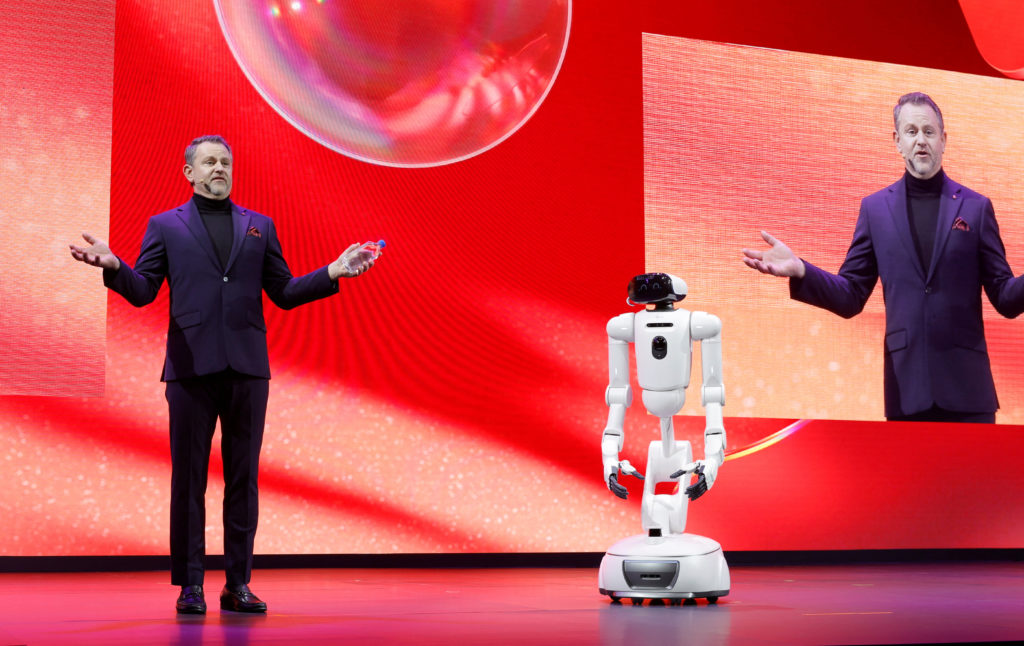
CES 2026 opened with a fresh AI buzzword dominating conversations: “physical AI,” Nvidia’s framing for models trained in simulated environments using synthetic data before being deployed into real-world machines. The idea is to take advances in generative AI and agent-like reasoning and apply them to robotics, vehicles and industrial systems that must navigate physics, safety constraints and unpredictable environments.
On stage, Nvidia CEO Jensen Huang showcased a set of new efforts aimed at bridging that gap between digital intelligence and physical action. Among them was Cosmos, an AI foundation model described as capable of simulating environments governed by real-world physics, a capability meant to accelerate training and testing for robots and other autonomous systems.
Huang also discussed an AI model designed for autonomous driving, positioning it as part of an ecosystem that spans training, simulation, and deployment. The pitch was that better simulation and better models can reduce the time and cost required to build safer automated systems, especially as regulatory scrutiny and public expectations rise.
A central hardware message at CES was Nvidia’s next-generation platform, Rubin, named after astronomer Vera Rubin. The company described the platform as in full production, emphasizing that next-stage AI workloads require tightly integrated advances across GPUs, CPUs, networking and software rather than isolated performance jumps in a single component.
The event also highlighted partnerships aimed at pushing AI deeper into industrial workflows. Nvidia pointed to collaboration with Siemens as part of a broader strategy to link AI compute with design, simulation and manufacturing software, an approach intended to make “factory-scale” automation more feasible and to embed AI into the tools used by engineers and operators.
While the product announcements drew enthusiasm, the subtext was competitive pressure. Rivals are racing to offer chips and platforms for training and inference, and customers are looking for proof that AI can deliver measurable returns beyond experimentation. By spotlighting both models and systems, Nvidia signaled it wants to remain not just a chip supplier, but a full-stack enabler for the next wave of automation.
As CES continues, the industry’s big question is whether “physical AI” will become a sustained category like cloud computing or mobile, or whether it will remain a marketing label. Nvidia’s bet is that the convergence of simulation, robotics and AI compute will define the next phase—and that the companies who control the platforms will shape how quickly those machines arrive.
REPORTING RECORD
- SRC-01PBS NewsHourPBS NewsHour