House panel advances bill to let Congress block certain AI chip exports to adversaries
The House Foreign Affairs Committee advanced the AI Overwatch Act, which would expand congressional oversight of AI chip exports—especially to China—setting up a fight over national security, trade authority, and U.S. tech competitiveness.
- PUBLISHED
- UPDATED
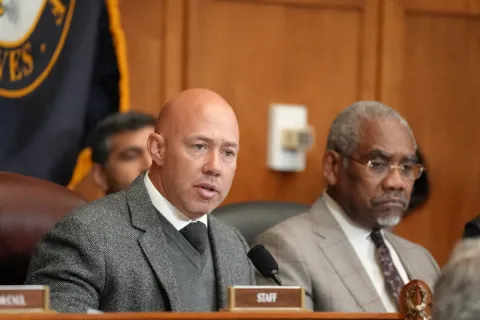
A bipartisan vote in the U.S. House Foreign Affairs Committee advanced legislation that would give Congress new power to block exports of certain AI-related chips to adversary countries, a move supporters frame as a national security upgrade and critics describe as an intrusion into executive-branch trade authority.
The bill, known as the AI Overwatch Act, passed out of committee by a wide margin. Backers argue that advanced computing hardware is now central to military capability, cyber operations, and industrial power—and that U.S. policymakers should treat the export of leading chips as a strategic decision rather than a routine commercial transaction.
The driving focus is China. Proponents contend that restricting access to high-end processors can slow the development of systems that could be used for surveillance, autonomous weapons, and sophisticated intelligence applications. They also argue that export policy can be structured to support allies while preventing the most sensitive technology from reaching governments considered hostile to U.S. interests.
Opponents, however, warn that overly rigid limits can backfire by reducing U.S. leverage, pushing buyers toward alternative supply chains, or encouraging domestic innovation abroad. The debate also overlaps with intra-party tensions: some conservative figures are wary of giving Congress a de facto veto over executive decisions and see the bill as constraining the White House’s flexibility in trade negotiations.
Beyond geopolitics, the bill illustrates how AI hardware has become a frontline policy topic. Where regulation once focused mainly on software, safety, and privacy, lawmakers are increasingly targeting the physical substrate of AI—chips, data centers, and compute capacity—as the point where rules can be enforced.
If the bill moves to a full House vote, the next phase is likely to revolve around which chips are covered, how quickly export decisions can be made, and whether the U.S. can maintain tech leadership while tightening controls on where its most advanced computing power can go.
REPORTING RECORD
- SRC-01AxiosAxios