Carney dismisses Trump’s tariff threat as Canada heads into USMCA review talks
Canadian Prime Minister Mark Carney said President Donald Trump’s tariff threats should be seen as negotiating posture ahead of the scheduled review of the U.S.-Mexico-Canada Agreement. The latest flare-up came after Trump warned of a 100% tariff on Canadian imports if Canada pursued a China deal—something Carney said Canada is not seeking in free-trade form. The dispute lands amid wider tensions over trade rules, industrial policy, and the politics surrounding Chinese electric vehicles and supply chains.
- PUBLISHED
- UPDATED
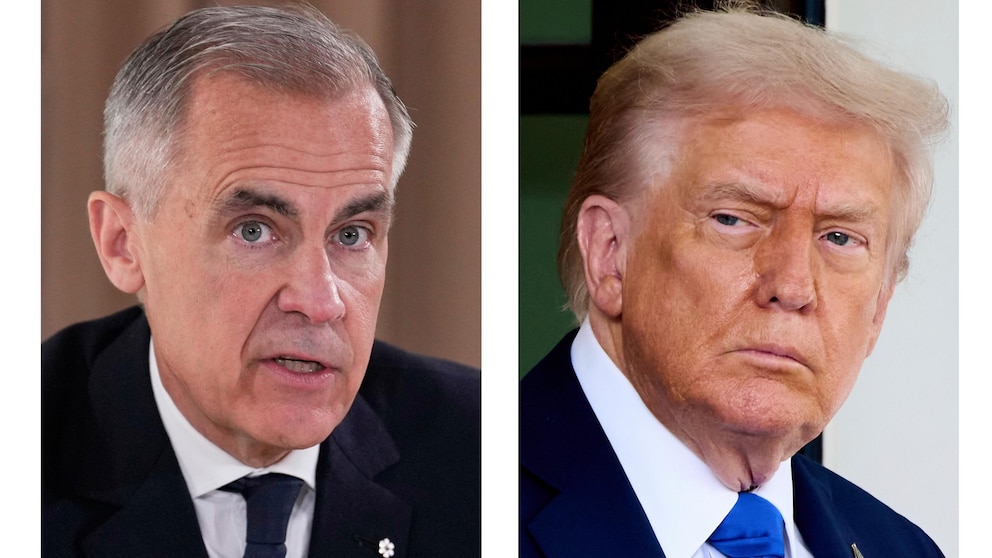
Tariff warnings meet a trade-pact calendar
Canada’s prime minister, Mark Carney, said Monday that some of President Donald Trump’s latest tariff threats amount to positioning before talks, as the region approaches a built-in review of the United States–Mexico–Canada Agreement. Carney said he expects the process to be forceful and detailed, but emphasized that it is a review mechanism embedded in the pact rather than an automatic full rewrite.
The China question: limited arrangements vs. “free trade”
The immediate flashpoint is Trump’s warning that he could impose a 100% tariff on Canadian goods if Canada moved toward a trade deal with China. Carney pushed back, describing Canada’s recent engagement with Beijing as narrow and sector-specific, not a broad free-trade agreement. He also argued that Canada is operating within obligations and understandings that shape how signatories handle new trade relationships with nonmarket economies.
Electric vehicles, caps, and supply-chain politics
Tensions have been amplified by the politics of Chinese electric vehicles and the use of tariffs and caps as industrial policy tools. Canadian officials have said earlier measures were designed to align with allied approaches while protecting domestic manufacturing. Yet they also contend that targeted adjustments can help relieve pressure in sectors that were hit by retaliatory tariffs, provided those adjustments do not undercut North American trade commitments.
Why markets and businesses are watching closely
For companies that depend on cross-border supply chains—autos, parts, agriculture, and consumer goods—the difference between rhetorical tariff threats and enforceable policy can translate into real costs. Even without immediate tariffs, businesses may need to reprice contracts, re-route inventory, or build contingencies if negotiations become volatile. Ottawa, Washington, and Mexico City now face the challenge of keeping the USMCA framework predictable while domestic politics in each country raise the temperature.